Add your promotional text...



Self-Care Categories: The 7 Dimensions & Types of Self-Care That Matter
Explore the most important self-care categories and discover the types and dimensions of self-care that restore balance, resilience, and emotional well-being.
SELF-LOVE, HEALING & INNER WORK
Soul Sisters Tarot
6/10/202513 min read


Self-Care Categories That Really Matter: A Real-Life Story of Healing & Balance
This guide is part of our Self-Love Journey, where we explore emotional healing, self-compassion, and gentle practices that help you build a deeper and more supportive relationship with yourself.
Self-care categories help us understand the different areas of life that require attention in order to feel balanced and resilient. From physical and emotional health to social and spiritual well-being, each dimension plays a role in preventing burnout and restoring hope. In this article, we explore the most important self-care categories through a deeply personal real-life story.
Did you know that approximately 280 million people experience depression? I mean, that’s a lot of people. According to the World Health Organization, depression is one of the leading causes of disability worldwide, and it doesn’t just show up as sadness. It often creeps in as burnout, numbness, irritability, or that heavy fog that makes everyday tasks feel like mountains.
For many of us, the fast pace of life, constant demands, and emotional overload make it easy to neglect our own needs. That’s where self-care comes in, not as a luxury, but as a vital, protective strategy.
If you’re just beginning this journey, our guide to self-love and healing offers a gentle path into deeper inner work and emotional restoration.
In this article, I’ll share a real-life story of hitting a breaking point and how to rebuild your well-being through four foundational self-care categories that helped us reconnect with ourselves, regain energy, and start thriving again.
What Are Self-Care Categories?
At its core, self-care is a deliberate, ongoing practice of nurturing our mental, physical, emotional, and even financial health. It’s not self-indulgence; it’s self-preservation. In fact, mastering the art of self-love is often the foundation for building sustainable self-care habits that truly last.
These categories, or dimensions, help us better understand where we’re thriving and where we might be neglecting ourselves.
Let’s talk about benefits.
Reduces burnout, anxiety, and depression
Increases resilience and coping skills
Improves sleep, energy levels, and concentration
Boosts emotional intelligence and relationship satisfaction
Promotes better physical and mental health outcomes
Enhances professional and personal life satisfaction
And perhaps most importantly: it reminds us that we matter, too.
Self-care categories evoke conflicting feelings?
The term "self-care" can trigger mixed reactions. Some associate it with luxury or even guilt, especially caregivers or professionals used to helping others first.
But the truth is: if your cup is empty, there’s nothing to pour anymore from it. Whether you're a social worker, parent, or busy professional, neglecting yourself often leads to reduced effectiveness in the roles that matter most to you.
Instead of resisting it, reframing self-care as an essential, not optional, part of daily life is key.
I am absolutely sure that this will cause conflicting feelings in some readers:
“Why sleep, you can rest in the grave.”
“I am alone, and I was not created to be with people. I live as a hermit in the forest, and that is how I like it, and that is how it will stay.”
“No, I don’t ask anyone for any help; I can do it myself. I always have, and I will continue to do it.”
“Spiritual? – I’m not going to do any voodoo stuff, that’s ridiculous.”
Stop – let’s take a closer look at these categories.
The Four Core Self-Care Categories
Most specialists agree that there is a model with four core dimensions of self-care. If you work on all of them, this gives you a more balanced, resilient life.
Physical Self-Care
This includes nutrition, exercise, and good sleep. It’s not worth spending your entire life sleeping, but we can recognize an exhausted person from afar. He is tired, his face is gray, his eyes are dark, his posture is slumped, as if he were carrying a large log on his shoulders. So these are just words that he will finally be able to rest.
The body and mind are deeply connected. Physical self-care means nourishing your body so it can support everything else you do. Whether it's a healthy salad for a quick snack or a good matcha green tea recipe, there are many ways to support your physical health.
Ask yourself:
Are you getting enough quality sleep?
Do you eat foods that fuel your body?
Are you moving regularly?
Do you attend health checkups and follow medical guidance?
Even simple changes—like a daily walk or improved sleep routine—can spark big improvements in your energy and mood.
Social Self-Care
Communication is the main keyword in this category. There are many ways to communicate, especially these days. We all need communication – sharing thoughts, discussing world affairs, and sometimes a little argument. Nice evenings with loved ones and long evening phone calls. Some more, some less.
Yes, there are indeed people who prefer to live alone and even need long hours in their own company. Usually, such people get their social side by interacting with colleagues at work, and most of the time, these people have a pet or at least one good friend or girlfriend with whom they go to a cafe at least once a month.
We are wired for connection. Social self-care involves maintaining and nurturing relationships that uplift and support us, and acknowledging and letting go of toxic relationships.
Do you spend quality time with friends or family?
Are you nurturing relationships or letting them run on autopilot?
Are your social interactions energizing or draining?
It’s not about how many people you know—it’s about the quality of those connections.
Spiritual Self-Care
In addition to various rituals, this includes, for example, a walk in nature, reading a book, meditation, visualization, watching a good movie, as well as drawing, painting, music, and any creative activity.
Spiritual self-care fosters meaning, purpose, and connection to something greater than ourselves. It can be religious, but doesn’t have to be.
Activities might include:
Meditation or prayer
Spending time in nature
Journaling about your values or purpose
Reading spiritual or philosophical texts
This dimension grounds us when life feels overwhelming.
Emotional and Psychological Self- Care
Among all areas of self-care, emotional self-care plays a vital role in helping you process your feelings and build a more supportive inner environment.
Find positive ways to keep your mind happy and balanced. Set boundaries and ask for help when needed. Learning how to set boundaries for yourself is one of the most powerful forms of emotional self-care. Don’t be afraid to just be that person who makes mistakes and needs support sometimes.
Emotional self-care also includes how you speak to yourself, and practicing self-compassion can be one of the most supportive ways to care for your inner world.
This is about how we process emotions, navigate stress, and maintain a healthy inner world.
Do you have tools to handle anxiety or sadness?
Are you practicing self-compassion or harsh self-talk?
Do you make time to reflect, journal, or seek therapy?
Supporting your emotional health helps you respond rather than react, and builds long-term resilience. Guided reflection tools like these 365 journal prompts for mental health can make emotional processing feel less overwhelming and more structured.

Additional Self-Care Categories You Shouldn’t Ignore
Beyond the core four, there are less-discussed but equally crucial types of self-care that we need to discuss here.
Financial Self-Care
A lot of money-related things can cause a lot of stress that can affect your good night's sleep, relationships, and your mental health.
Ask yourself:
Do you have a budget?
Are you saving or preparing for future expenses?
Are your spending habits aligned with your goals?
Financial self-care is empowering—and often overlooked.
Professional Self-Care
Many of us devote most of our energy to work, but rarely reflect on whether it's sustainable.
Are you setting healthy work boundaries?
Are you learning and growing in your field?
Do you feel supported or undervalued?
Professional self-care might involve saying “no,” taking breaks, seeking mentorship, or adjusting career goals.
Environmental Self-Care
This one’s easy to overlook, but your surroundings impact your mental state.
Is your workspace or home cluttered or calm?
Do you have access to natural light or greenery?
Do your environments support rest and focus?
Even small changes, like a tidy desk or a plant by your window, can enhance well-being.
Quick Overview: The Main Self-Care Categories
Physical – Sleep, nutrition, movement
Emotional – Processing feelings, boundaries, therapy
Social – Healthy relationships and support systems
Spiritual – Meaning, purpose, mindfulness
Financial – Money awareness and planning
Professional – Work-life balance
Environmental – Supportive surroundings
When Self-Care Feels Impossible: The True Story
Sometimes life can get really hard. And I believe so many of us fight the battle no one really knows about. Here’s the truth:
“If you are at a point in your life where everything is going well, or more or less well, this theory is very easy to apply in practice. However, this theory takes a completely different turn when you are really having a hard time. What is daily self-care like in reality when only dark clouds are hovering over your head?
If you have lost everything you could possibly have one day, then none of this will help at that moment. You have no desire or strength to take a short walk. A friend calls, and you don’t answer. A hundred thoughts are running through your head, and even then, nothing comes out of reading a book or watching a good movie. It seems completely impossible at that moment to look in the mirror and tell yourself, Oh, how good I am. You want to crawl under the covers and stay there for several days. To get away from real life and spend the rest of your life in dreamland.
To fall asleep, you take a glass or two of wine and let the mind poison lull you to sleep, and it’s not a peaceful sleep. And so the days and weeks go by, and you might not even notice that. One day, you discover that this doesn't help anymore. In addition, you feel how the people dearest to you make you nervous, you don't want to see anyone, not even your pet. Everything around you, on you, and near you seems like an excessive obligation, even your own family.
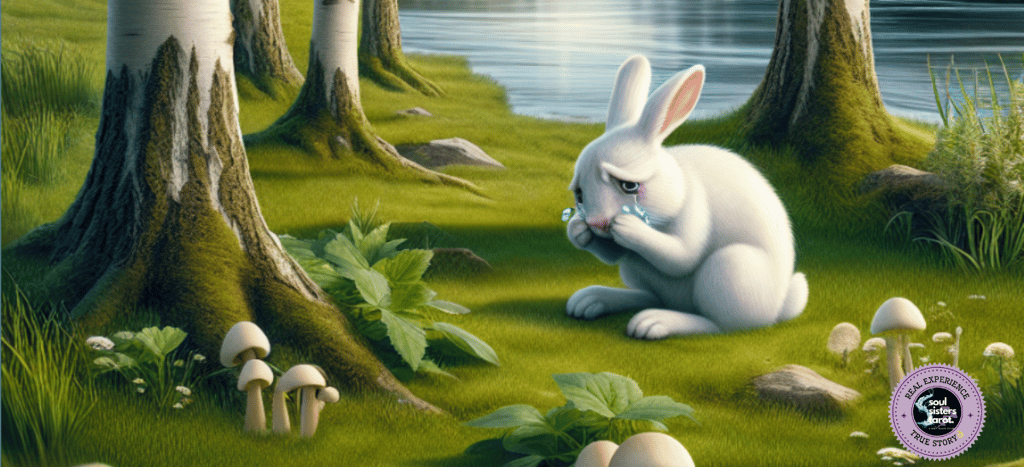
You find yourself wondering if the place where I am with myself today is still the right place. You cry, but the last bit of strength you still have won't allow you to do it in front of others. Because the final shame would be if you looked weak. Your hands are shaking, your heart is beating out of your chest, your ears are ringing, and your head is aching. And so you find yourself silently crying in a windowless bathroom.” - Gerly
Worrying actually never helps
“First of all, whether you are having a bad day or even several difficult weeks, one thing is clear and proven. Worrying solves nothing. A little mantra helps me, but I have to remind myself of it every time worry creeps in and anxiety takes over. I always repeat the same thing to myself: “Worrying doesn’t help, everything will eventually work out, and I will cope with the situation; I am the master of the situation.”
This happens several times a day, and there is nothing to be done; you have to repeat it until you understand. It usually takes a whole month for the brain to adopt a new thought pattern. Often, the problem is precisely the thought pattern that the brain has adopted before, which is why we don’t feel confident enough and think that we are unable to cope with difficult situations.” - Gerly
Over time, practices like this can support breaking negative thinking patterns for a healthier mindset, especially when anxiety feels overwhelming.
Limit your worrying time
“Another option is to worry every day, but only once, and set a specific time limit for it. For example, 30 minutes, 1 hour. This is a trick that works better if the burden of worry is not too great. But if you feel that the burden is so great that you can't even keep yourself straight, then you won't be able to control yourself, let alone a time limit.
In a difficult situation, it is very difficult to set a time limit for worries, because the subconscious mind carries them with it all the time. So only the tools that can be used with force remain. I would like to point out here that a burden is not only something that is bad; it can be either a big change, which can also be good, but it is difficult to adapt to, or it is unfamiliar.” - Gerly
When it’s time to collapse
“Thirdly, I would like to point out another very important point: sometimes there is nothing to do, and no one else can help. This is the place of collapse, only to then rise again. Nothing lasts forever, so neither does a difficult situation. When in a situation, a person often does not want to help themselves, nor do they let anyone else get close to them.
Then you have to feel these feelings inside yourself. As if to live them over again, maybe even several times. If you don't do this and forcibly suppress your feelings, then one day they will surface again.” - Gerly
There’s no tomorrow when it comes to self-care
“Don't fall for excuses. "I won't do it today, I'll see what happens tomorrow." Tomorrow will become the day after tomorrow, and soon you will be depressed. You have children and you can't - do the bare minimum and talk to them too, because that's the only way they will learn that adults will get tired and have a hard time too.
The world is not just a soft cloud of cotton wool. Believe me, children don't see it when you fail; on the contrary, they see that you are an all-powerful soldier who never falls. But when something happens, everything collapses with a crash, then children feel that they are to blame or that the world is not such a pink-scented place where unicorns live, who sneeze glitter, and every day is a dance day.
They have the right to know and learn about the more difficult sides of human relationships earlier than we had planned. Precisely so that they, too, can understand and perceive what is happening around them.” - Gerly.
Self-care categories also allow for compassion for yourself
If you are anxious, feel that feeling and pain, and think for a moment about what is causing that feeling.
If you want to cry, take that time and cry. Cry yourself out.
If you feel like running, go run, even if it takes your breath away.
If you want to break something, see if someone has a pile of firewood to chop into pieces.
If you want to be alone, drive somewhere in the country, get a room, and go to a spa.
If you have several burdens to carry, put one burden down and deal with it later.
Allow yourself to be tired, let things be. Tell your family members that you can't make it, and you need help.
Maybe it’s hard to believe, but everything really happens for a reason
Things come into your life because your soul needs a new experience. To learn on the journey.
“Even though you engage in self-care every day, you are never ready for life to throw several big burdens at you and then pull the rug out from under you. You are as if you have been hit in the head, and no self-care even comes to mind, much less can you console yourself that the soul came to have a new experience.
At that moment, you are as if in darkness and cannot help yourself in any way. You just are. But when you have reached your destination with your burden, you realize that the journey itself was important, not the destination. You are wiser and more experienced. The soul nesting inside you was like a flickering candle, and you still feel it. At that moment, you realize that all this was necessary for you to grow.” - Gerly
Often, these quiet shifts are actually signs of emotional healing unfolding beneath the surface.
FAQ: Self-Care Categories
What are the main self-care categories?
The main self-care categories typically include physical, emotional, social, and spiritual well-being. Many experts also include financial, professional, and environmental self-care.
Why are self-care categories important?
Self-care categories help identify neglected areas of life. By addressing each dimension, you can prevent burnout, improve resilience, and create long-term balance.
How many self-care categories are there?
Most models identify four core self-care categories, but expanded frameworks include up to seven dimensions, including financial and professional care.
What is the difference between emotional and spiritual self-care?
Emotional self-care focuses on processing feelings and managing stress, while spiritual self-care relates to meaning, purpose, and connection to something greater.
What self-care category is most important?
No single category is most important. Balance between physical, emotional, social, and spiritual care creates the strongest foundation for well-being.
Can self-care categories help with burnout?
Yes. Identifying which self-care category is neglected often reveals the root cause of burnout. Addressing sleep, boundaries, emotional support, and stress management can significantly reduce burnout symptoms.
What are the 7 dimensions of self-care?
The seven dimensions of self-care often include physical, emotional, social, spiritual, financial, professional, and environmental well-being. Together, these dimensions create a balanced foundation for long-term resilience and personal growth.
What are examples of emotional self-care?
Emotional self-care examples include journaling, therapy, setting boundaries, practicing self-compassion, limiting negative self-talk, and allowing yourself to process difficult emotions without judgment.
What is physical self-care beyond exercise?
Physical self-care includes getting enough sleep, eating nourishing foods, attending medical checkups, managing stress, staying hydrated, and allowing your body to rest when needed.
How do I know which self-care category I’m neglecting?
Pay attention to where you feel most drained. Chronic fatigue may signal neglected physical care, irritability may reflect emotional overload, isolation may point to social imbalance, and feeling lost may suggest a need for spiritual self-care.
Are self-care categories the same as a self-care routine?
Not exactly. Self-care categories describe areas of life that need attention, while a self-care routine refers to the specific habits or practices you follow daily or weekly.
Can self-care categories improve mental health?
Yes. When practiced consistently across different dimensions, self-care categories support emotional regulation, reduce stress, and strengthen coping skills, which all positively impact mental health.
How do self-care categories relate to burnout recovery?
Burnout often occurs when one or more self-care categories are ignored for too long. Restoring sleep, emotional support, healthy boundaries, and meaningful connections can significantly support recovery.
Is spiritual self-care religious?
Spiritual self-care does not have to be religious. It can include meditation, nature walks, reflection, creative expression, or any practice that helps you feel connected to meaning and purpose.
What is the most overlooked self-care category?
Financial and environmental self-care are often overlooked. Money stress and chaotic surroundings can deeply affect emotional and mental well-being.
How can beginners start working on self-care categories?
Start by assessing each category honestly. Choose one small action in the area where you feel most depleted, such as improving sleep, reaching out to a friend, or journaling for five minutes a day.
Why Self-Care Is Not a Luxury
Taking care of yourself isn't a luxury; it's a necessity. After our own burnout experience, we learned that tending to these self-care dimensions wasn’t selfish; it was how we reclaimed our lives. If you want practical exercises to rebuild your relationship with yourself, our self-love workbook offers guided tools to support deeper reflection and personal growth.
Your self-care story may look different than yours, but you have a story. And the best time to start writing the next chapter is today.
Let these categories guide you, not as a checklist, but as a compass, pointing you back to yourself. If you want to go even deeper with this topic, feel free to read our self-love and healing article.
If you feel called to explore your healing journey more deeply, you can discover our journals, self-love tools, and spiritual guidance inside Sisters Creation, where we share the resources we have created to support inner growth.
With Love,
Gerly & Caitlin,
Soul Sisters Tarot
Soul Sisters Tarot
A Soft Place to Grow.
Join our weekly newsletter
© 2026. All rights reserved.
Inspirational Coaching OÜ
sisters@soulsisterstarot.com